
5 May Birthstones That Aren’t Emerald
The traditional birthstone for May is emerald, that slightly misty, deep green precious stone that sits alongside ruby, sapphire and diamond at the top of the most expensive stones available. For both fine jewellery and costume jewellery, emerald can be on the pricey side. And then there’s the colour – some people just don’t like that shade of green! So what can you do if you want to go with a May birthstone but aren’t an emerald fan – the answer is to opt for one of the other alternative birthstones for May.
Agate
Top of the list of alternatives is Agate, featuring as the birthstone back in Roman times as well as in Hebrew birthstone systems. It has long been the traditional ‘other’ May birthstone as well as being associated with the star sign Gemini. It is a type of chalcedony and must have bands to differentiate it from other types of the stone, apart from dendritic and moss agate that have their own particular patterns.
Agate has been around in jewellery and in carving for a very long time and was used by the ancient Minoan culture in Crete to make statues and other items. Most of the agate variations come from volcanic rocks or sites with ancient lava flows and this is why the stones often have bands to them. The stones are found in Uruguay, Brazil, Mexico, Canada, the US as well as in Italy, India, China, Egypt, Scotland and Madagascar.
Types of agate
- Agate geode – when the agate is surrounded by a geode, often of small quartz crystals
- Blue lace – light blue bands in a wavy pattern
- Botswana – fine white lines on grey blue, purple or peach stones
- Condor – from San Rafael, Argentina, various colours
- Crazy lace – twisting bands of colour
- Dendritic – translucent chalcedony that has inclusions looking like trees or ferns (technically not an agate but gets classified as one)
- Eye – bands that form perfectly round circles, looking like an eye
- Fire – form of chalcedony that has fire effects within it similar to opal
- Iris – rare form that has spectral colours on a white base
- Laguna – dense bands, found in Mexico
- Moss – another chalcedony that has green hornblende inclusions that look like moss
- Onyx – type of chalcedony that is termed as agate when has white bands
- Sardonyx – brown or reddish bands with white or black between them
- Snakeskin – scale-like patterns looking like the skin of a snake
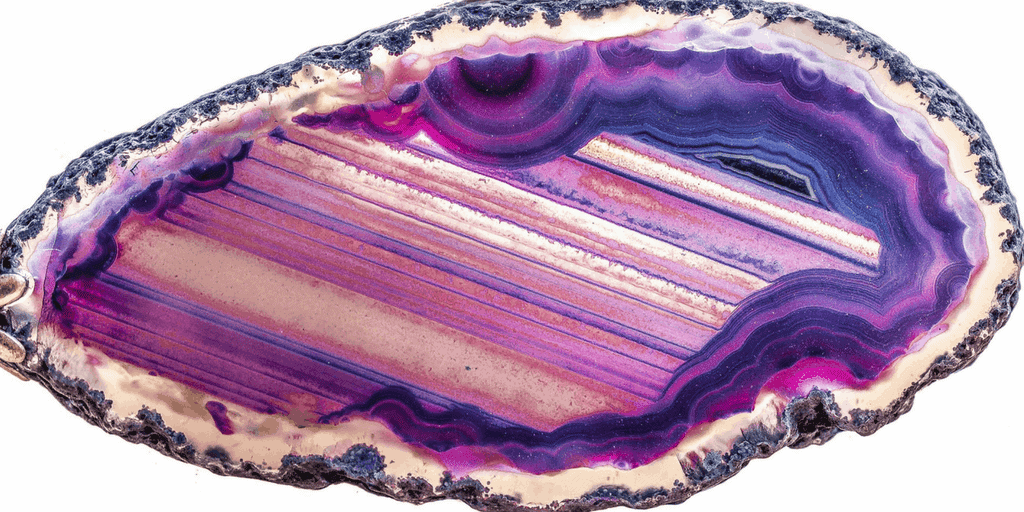
Agate is also sometimes dyed or treated to create a variety of bright colours, with the stones from Brazil being most popular for this. Another version of this are known as frosted agate and have a frosted look to them in addition to the bands.
Chrysoprase
Chrysoprase is a newer addition to the lists of birthstones for May and was traditionally associated with the star sign Gemini. It shades a green shade with emerald and is the same family of gemstones as agate, being a type of chalcedony. It is usually an apple green colour; though darker shades do occur. It gets its colour from traces of nickel in the same way that emerald gets its colour from chromium.
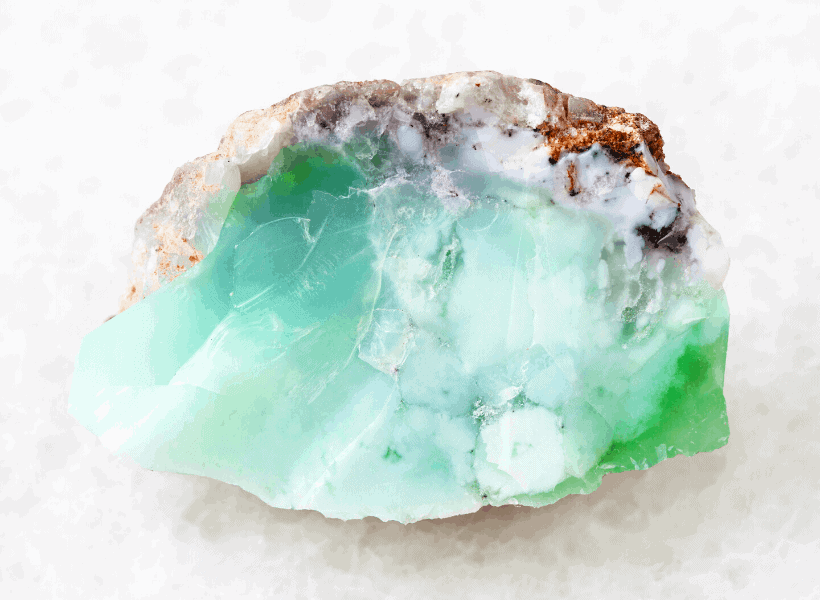
Chrysoprase is found in Queensland and Western Australia, Germany, Poland and Russia as well as Brazil and in both California and Arizona in the USA. Stones found in Australia are often referred to as jade while the largest stone ever found came from a mine in Szklary in Poland.
Wearing jewellery in Chrysoprase is relatively easy, the stone has a good hardness and can be cleaned with soapy water and a soft cloth. Keep it away from household chemicals and store it out of the sunlight as this can drain the colour.
Chalcedony
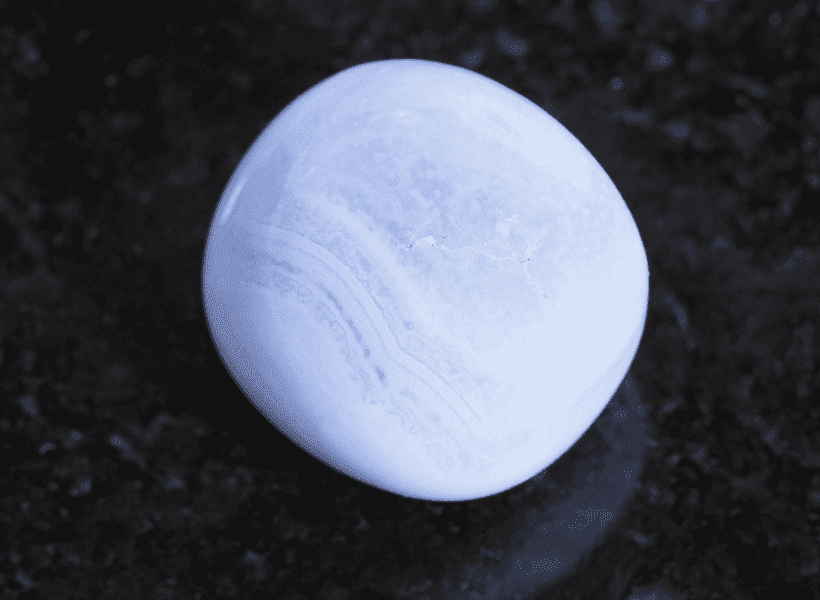
Along with related stones agate and Chrysoprase, chalcedony is also listed as a birthstone alternative for May. Like agate, it comes in a wide range of colours depending on the minerals within the stones. It is believed to be named for the town of Chalcedon in Asia Minor and was known to the ancient Greeks and Romans.
Carnelian
Carnelian is a type of quartz that is mostly associated as a birthstone for August but in the Hebrew calendar is associated with May alongside agate and chalcedony. The stone is an ancient one in terms of its use by mankind, with jewellery and other items made with it dating back thousands of years. Both the Ancient Greeks and Romans placed a lot of value on it while it has also been popular for signet rings – Napoleon returned from Egypt with one such ring.
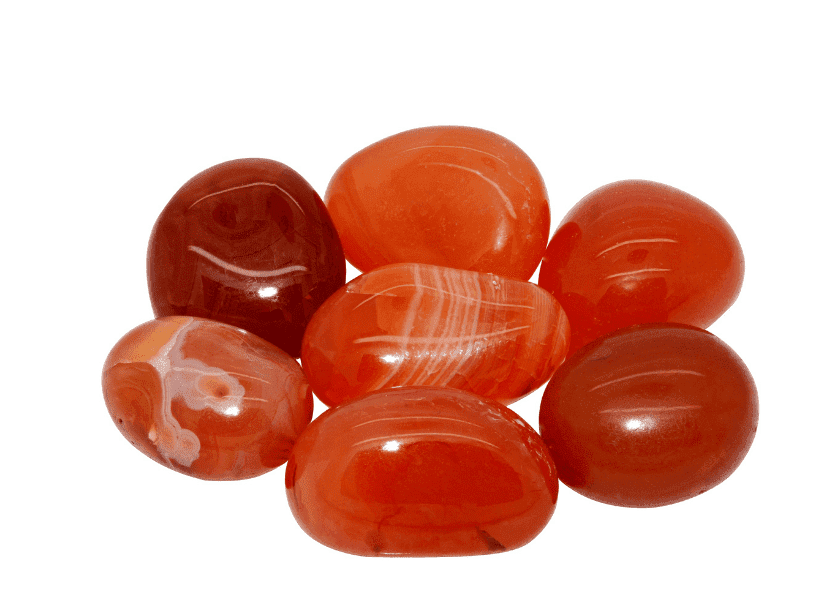
The colour of the stone varies from a reddish orange to brown to a pink shade and there are sometimes bands in the stone, often being referred to as carnelian agate. Most of the stones on the market today come from either Brazil of Uruguay though they are also found in Russia, Poland, Slovakia, Iceland, Romanian as well as India, Japan and Peru. Small deposits are found in the US, in France, Australia and in Cornwall.
Sapphire
Finally, if green and such just really isn’t your thing and you can’t get away with the reddish shades of carnelian, then go with the Tibetan birthstone for May – Sapphire. One of the precious gemstones alongside emerald, it is most commonly found in a rich blue shade but also comes in a wide range of rare colours including pink, yellow and green.


