
6 Things You Never Knew About Aquamarine Gemstones
If you like the shades of the sea and the sky, then you will love the birthstone for March. Aquamarine is a stone associated with the calm and peaceful side of the oceans and comes in a range of shades that means there are enough subtle differences to suit everyone.
Aquamarine is a type of beryl like emerald
Aquamarine comes from the Latin aqua marina or ‘water of the sea’ and is a type of beryl, a family that also contains emerald and morganite. The stone isn’t always a pale blue shade but can come in different colours depending on the other elements within it – such as golden yellow shades or a dark blue shade that is known as maxixe. Despite being the same family as emerald, aquamarine is a clear stone with no inclusions or that smoky quality that the green stone is known for.

Aquamarine is found around the world
Some of the best deposits of gemstone quality stones come from Sri Lanka and Brazil as well as in central Colorado, Wyoming and Idaho in the US, Colombia, Zambia, Madagascar, Malawi, Kenya and Tanzania around the world. The very largest gemstone every found was mined in Marambaia in Minas Gerais, Brazil and weighed over 240lb. The largest cut stone is the Dom Pedro aquamarine, now found in the Smithsonian Institute.
Stronger colours are better quality
If you are looking for gemstone quality aquamarine, then the more saturated the colour, the better the quality of stone. However, the larger stones tend to be a lighter colour. The stone is often cut into rectangular or square cuts for gemstones as the beryl family works particularly well in these shapes.
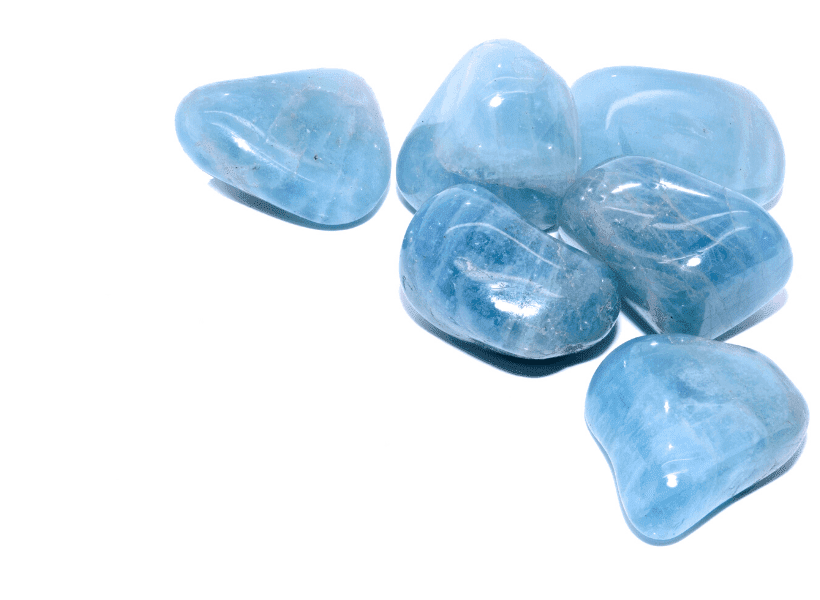
Round, pear, oval and cushion cut are also popular while the stone works well in cabochons to be added to other styles of jewellery. It also comes in bead quality stones in a variety of shapes and sizes, including faceted and round cut.
Aquamarine was seen as lucky for sailors
Legends tell that aquamarine was found in the treasure chests of mermaids and was considered the lucky stone of sailors. Both the ancient Greeks and Romans knew the gemstone and carried it to ensure safe passage across the sea including warding off sea-sickness. By the Middle Ages, gemstones were associated with the cosmos and aquamarine had been associated with Neptune as well as with the month of March.
The gemstone was believed to purify the liver
As with all stones, aquamarine has developed associations with certain healing powers and benefits, though how accurate these are is scientifically unknown. It was said to purify the liver, kidney, spleen and intestines as well as reducing irritability, impatience and calming aggressiveness. It could even help cure blood poisoning, aid in circulation and draw out the poison from a sting or a bite.
Anyone can wear aquamarine
Aquamarine is a popular stone for a number of reasons. It is relatively sensible in its price compared with emerald or the other precious stones and there are a nice range of shades available. It is also available in many different shapes and forms to suit all styles and budgets. It works for any colour of skin or eye so means it is popular around the world and it works well alongside other stones.

In costume jewellery, it matches up well with similar colours of Swarovski crystal and other glass beads, accenting its colour or working well with it.


