
What is the July Birthstone?
The birthstone for July is one of the gemstones counted as the most precious – the ruby. This pinkish red stone comes from the same group of minerals as sapphire and is grouped with diamond and emerald as the four most precious stones. But where do rubies come from and what are they associated with as well as the month of July?
The science stuff
Ruby is a type of corundum that is given its bright colour by the presence of another element called chromium. Sapphire is the same type of mineral, only different elements within it cause it to be a variety of other shades including blue, green and pink. Ruby only comes in shades of red and pink, though can be so light to be almost colourless.
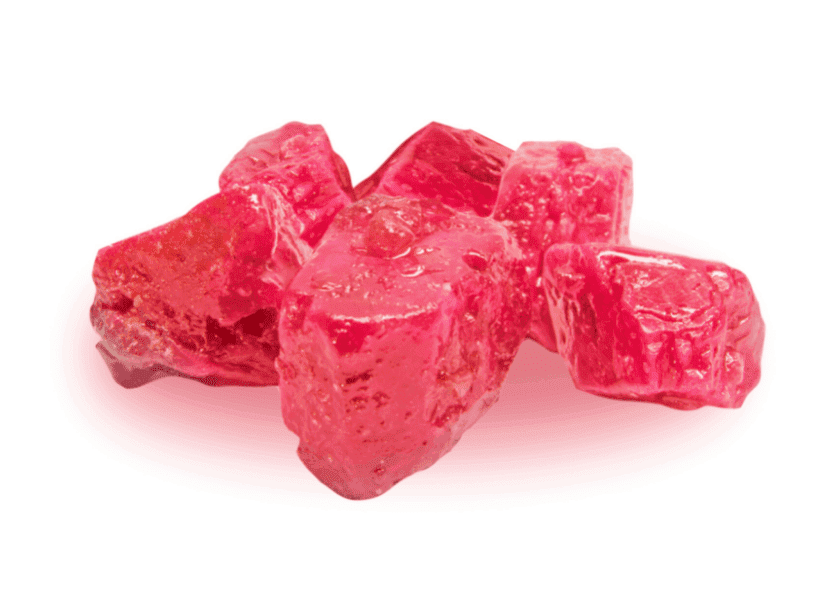
Rubies are also pretty hard stones, 9.0 on the Mohs scale with only diamond and a stone called moissanite topping it.
Where are rubies found?
The single biggest source of rubies around the world is the Mogok Valley of Myanmar and some of the best stones found have come from this area, though recently there seem to have been fewer discovered. Another area of the country where rubies are found is the Mong Hsu region while a new deposit has been spotted in the northern state of Kachin.
Other spots around the world where rubies are found include Thailand, Cambodia, India, Afghanistan, Australia, Namibia, Japan, Pakistan and Brazil. A few times they have also been mined in Scotland as well as the US states of Montana, North Carolina, South Carolina and Wyoming. A large deposit has recently been found under the receding ice of Greenland.
Macedonia is the only country to have a good supply of rubies in Europe and their stones are known for their particularly colour, being similar to the shade of raspberries. The stone even made it into the coat of arms of the country.
There are a number of different types of rubies from around the world. These include:
- Burma ruby – from Burma
- Burmese Ruby – refers to the exceptionally bright red colour but doesn’t mean they are always from Burma
- Pigeon’s Blood Ruby – blood red shade with a hint of blue
- Ruby fuchsite – dark red colour with green Fuchsite mixed in, found in India
- Ruby Zoisite – mixture of ruby and green Zoisite found in Tanzania; often carved into cabochons and ornamental figures
- Star ruby – stone displaying asterism, where a star shape is seen in the stone
Judging the quality
The methods used to judge the quality of a stone is similar to those used for diamonds and other precious stones. They are known as the Four C’s.
First is colour, often said to be the most important. That is subdivided into hue, saturation and tone. Hue is the closest to what we normally refer to as colour and the stones can have hues or red, orange, yellow, green and blue, known as pure spectral hues. In ruby, the primary hue must be red otherwise the stone is a sapphire.
Next up is clarity and this refers to the marks within the stone called inclusions. Emerald is a stone where inclusions aren’t a bad thing and rubies are similar, though many of these are so tiny that you can’t see them with the naked eye.
The carat is the measurement used to weigh the stones with one carat being around 200 milligrams or 0.20 grams. Stones are also measured in millimetres for their physical size. Carat is typically used to value a stone – the more carats, the more the cost.
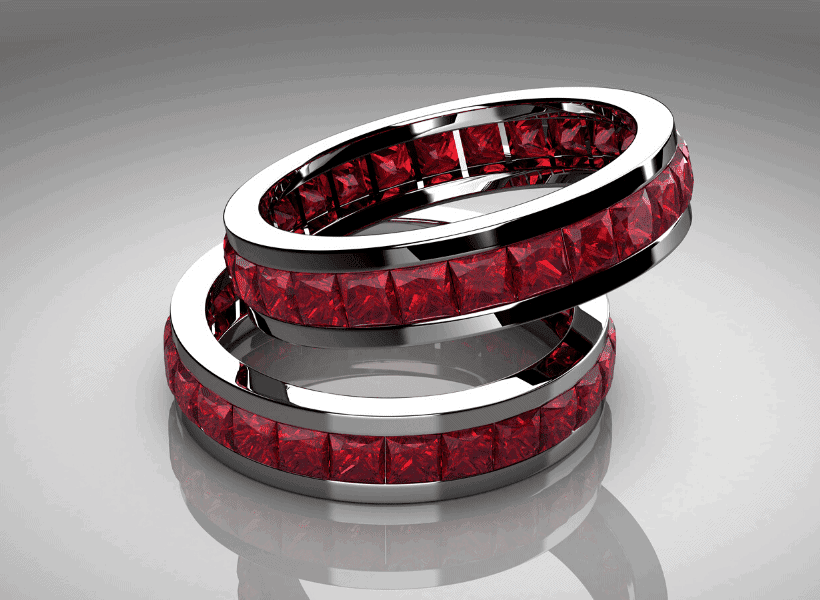
Finally, the remaining quality is the cut. This is the way the stone has been cut into a gem from the raw mineral mined in the ground. There are lots of different cuts including round and brilliant cut, with different numbers of facets to them to bring out the sparkle of the stone.

Rubies are also found as gemstone beads that are often used in costume jewellery, bringing the rich shade of red to the piece while being less expensive than finely cut gemstones.
Ruby associations
Rubies have been popular with royalty throughout history and were considered more valuable than diamonds. One of the Emperors of China was said to light his room using rubies and the crown of Prince Charles IV of Luxembourg once contains an impressive stone of 250 carats.
The belief in the power of rubies was also known. The Hebrew thought it brought health, prosperity and joy so they carved it into the shape of dragons. In ancient Burma, soldiers would inject ground up ruby into their skin because they believed it would protect them from fatal wounds. Others said they were a drop of blood from Mother Earth and associated them with fertility.
Ruby is associated with the Root Chakra and with increasing both vitality and the life force or chi or a person. It helps to achieve a clear mind, better concentration and greater motivation as well as giving the wearer a sense of power. It is also said to stimulate the heart and the enjoyment of the physical world.

As well as being the birthstone for July, it is an alternative for the month of December and is associated with the star sign of Leo in Hindu Astrology.
Famous rubies
One of the largest rubies is current in the Smithsonian Museum of Natural History in Washington DC. It is a 23.1 carat Burmese ruby set in platinum with diamonds and was donated by Peter Buck in memory of his wife Carmen Lucia. It came from the Mogok region of Myanmar.
When Elizabeth Taylor’s complete jewellery collection was auctioned by Christie’s in 2011, there were a few notable ruby pieces. This included an 8.24 carat ring that set a new ‘price per carat’ figure of $512,925 per carat, a total of $4.2 million for the whole piece as well as a ruby necklace that sold for $3.7 million.
The largest mined ruby was the Liberty Bell Ruby but this was stolen in a jewellery heist in 2011.
The single most expensive ruby is the Sunrise Ruby which sold at auction in 2015 in Switzerland for $30 million.
July birthstone
As the July birthstone, ruby features in many ideas for a birthstone necklace but it is an expensive gemstone. However you can often get beads made from slightly lesser quality rubies that are much more affordable for birthstone bracelets, necklaces and even rings. This red colored gemstone makes for an eye catching piece of jewellery, no matter what it does.


